
Tinnitus

A continuous tone the audiogram won't catch. Worst in silence. Worse still when someone says "try to ignore it."
Most clinics can't help with tinnitus, APD, hyperacusis, or misophonia not because the conditions aren't real, but because they aren't set up for them. Here's what's actually different here.
General audiology is built for hearing loss: audiogram, fitting, follow-up. The four conditions below sit beside hearing loss, behind it, or instead of it. clinician who’s set up for them. Each has its own auditory signature.
A continuous tone the audiogram won't catch. Worst in silence. Worse still when someone says "try to ignore it."

The hearing test comes back "normal." A busy room still feels like a second language. Phoneme-level testing is where it shows up.

Everyday sound at painful volume. Not over-sensitivity. The auditory system is reacting in a way it shouldn't.
A specific trigger producing instant, disproportionate response. Neurological pattern, not personality. CBT-based tools interrupt the loop.
Specialty conditions need specialty methodnotme audiogram run differently. Each technique below requires training, equipment, or scope the average clinic isn’t set up for.
The gold standard diagnostic battery for APD: comprehensive, phoneme-level, and built for adults. We start at the foundation, where the real differences show up.
Phoneme-level, clinician-led auditory training built directly from your evaluation results. Not an app but a structured, face-to-face intervention that works on the auditory pathway itself.
Identifies and interrupts the distress patterns driving tinnitus, misophonia, and hyperacusis. Focused on changing how the brain responds for long-term control, not just coping.
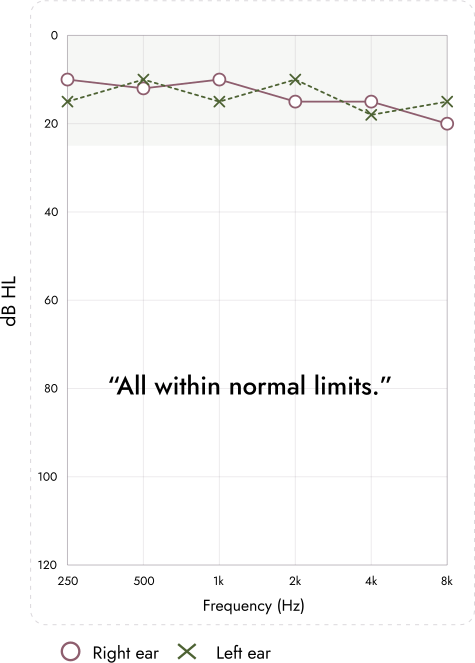
Every condition this practice treats is invisible to a standard audiogram. The chart says “normal” but your experience says otherwise. Both are true.
The audiogram measures the door. Tinnitus, auditory processing, hyperacusis, and misophonia all live further down the pathway: in the brainstem, the cortex, the way attention shapes what you actually hear.
A practice that earns trust by saying what it can’t do. The 15-minute discovery call exists in part so we can refer you to someone better suited before you’ve paid a thing.
No referral required to start. No charge if it turns out we’re not the right fit.